
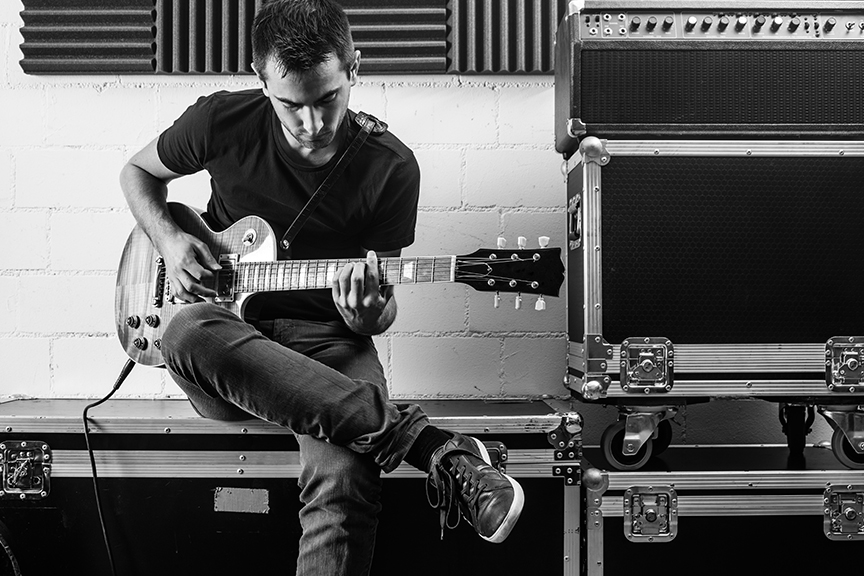
Artistic growth rarely feels the way artists expect it to feel. From the outside, growth is often imagined as a clean upward line: better songs, larger audiences, stronger performances, clearer identity, more opportunity, and increasing confidence with every step. In reality, artistic growth is usually uneven. It moves through breakthroughs and plateaus, confidence and doubt, experimentation and correction, public progress and private frustration.
That is normal.
For working artists, understanding this matters because the modern music environment often pressures musicians to present every stage of development as polished, marketable, and fully formed. Social media rewards finished moments. Streaming platforms reward consistency. Audiences often discover artists at whatever point the algorithm happens to place them nearby, without seeing the years of trial, failure, revision, and uncertainty that shaped the work. This can make artists feel as though they are supposed to arrive fully developed before they have been given room to become anything.
But no serious artist grows that way.
Musical identity develops through repetition, listening, performing, failing, recovering, and learning what remains true after influence begins turning into personal language. Early songs often imitate what the artist loves. Early performances often reveal what the artist cannot yet control. Early recordings often expose gaps that rehearsal alone did not reveal. None of that means the artist lacks value. It means the artist is in motion.
This is one of the most important truths musicians can hold onto: growth is not proof that the earlier work was meaningless. It is proof that the artist kept listening.
The research around expertise supports something musicians have known intuitively for generations. Psychologist K. Anders Ericsson and colleagues argued that high-level performance is strongly shaped by deliberate practice: focused, effortful work aimed at improving specific skills rather than simply repeating comfortable habits. Later debate has complicated how far deliberate practice alone explains elite achievement, but the basic lesson remains useful for musicians: improvement usually requires attention, feedback, correction, and time spent working directly on what is not yet secure. (web.mit.edu)
That matters because artists sometimes confuse activity with growth.
Playing often can help, but only if the artist is paying attention to what the experience reveals. Releasing often can help, but only if the work is improving rather than merely increasing in quantity. Touring can help, but only if the artist is learning how audiences respond, how the band communicates, how the songs land in different rooms, and how the project holds up under pressure. Time alone does not guarantee development. Time combined with honest reflection does.
This can be uncomfortable because real growth often begins where the artist feels least impressive. A singer may realize the emotional delivery is strong but the stamina is inconsistent. A guitarist may discover that tone and feel matter more than speed. A songwriter may recognize that a clever lyric is not always the same as a truthful one. A band may learn that the strongest song in rehearsal does not always move the room, while the simple song everyone overlooked becomes the one listeners remember.
Those realizations can bruise the ego, but they are part of becoming better.
Artistic growth also requires surviving comparison. Every musician develops inside a world filled with other musicians, and the internet has made that comparison constant. There is always someone younger, faster, louder, more visible, better connected, more polished, or seemingly further along. Without perspective, artists can begin measuring their own development against fragments of someone else’s public life. That kind of comparison rarely produces clarity. It usually produces panic.
The healthier question is not whether another artist appears ahead. The healthier question is whether your own work is becoming more honest, more capable, more focused, and more connected to the people it is meant to reach.
That kind of growth is often subtle before it becomes visible. The writing becomes less forced. The performance becomes less self-conscious. The band begins recovering from mistakes without collapsing. The artist learns which rooms fit the music. The audience begins responding to the work for reasons the artist can actually understand. The project starts feeling less like an imitation of influence and more like a voice that could only belong to the person creating it.
This takes time, and time has become difficult for artists to protect.
The music industry is growing in some measurable ways. IFPI reported that global recorded music revenues reached $29.6 billion in 2024, marking the tenth consecutive year of growth, with streaming remaining the dominant force behind recorded music income. More recent reporting on IFPI’s 2026 report stated that global recorded music revenue reached $31.7 billion in 2025, driven largely by streaming and paid subscriptions. (ifpi.org, reuters.com)
Those numbers show an expanding marketplace, but they do not mean individual artists are given patient development environments. In fact, many independent artists feel the opposite. The tools for distribution are widely available, but the pressure to remain visible can make development feel rushed. Artists are encouraged to release, post, announce, engage, perform, and monetize before they have fully understood what they are building.
That pressure can damage growth if the artist lets urgency replace depth.
Some work needs time away from immediate judgment. Some songs need to fail privately before they become strong publicly. Some identities need several versions before the real one emerges. Some bands need awkward shows before they learn how to become powerful together. Artistic maturity is not created only by exposure. It is created by experience processed honestly.
Financial instability makes this harder. The Music Industry Research Association’s survey of U.S. professional musicians, conducted with Princeton University Survey Research Center and MusiCares, found a median total income of about $35,000, with $21,300 from music-related work, and 61% of respondents said music income was not enough to meet living expenses. Artists trying to grow inside that reality are not only developing creatively. They are trying to do so while managing rent, jobs, transportation, health care, debt, family responsibilities, gear costs, and the emotional burden of uneven income. (pitchfork.com)
This is why artistic growth should not be romanticized as some pure creative journey untouched by real life. Growth requires conditions. It requires time, energy, safety, rehearsal, feedback, rest, and enough stability for the artist to keep returning to the work. When musicians are constantly financially strained, emotionally exhausted, or pressured to turn every unfinished stage of development into content, growth becomes harder to sustain.
MusiCares’ 2025 Wellness in Music Survey gathered nearly 3,200 responses from music professionals and focused on mental health, health care access, and financial wellness. That focus matters here because artistic development is not separate from well-being. Artists do not grow in isolation from the lives they are trying to survive. (musicares.org)
For working artists, one of the strongest decisions is learning to respect the stage you are actually in. That does not mean lowering ambition. It means understanding that each stage of development has a purpose. Early work teaches you what you respond to. Early shows teach you what the room hears. Early recordings teach you what your ideas become when captured permanently. Early failures teach you what does not hold. Plateaus teach you where more focused attention is needed.
Growth becomes healthier when artists stop treating every unfinished stage as embarrassment.
The audience does not need to see every draft of an artist’s development, but the artist should not hate the process privately. Every serious musician has earlier work that feels incomplete in hindsight. That is part of the evidence that growth occurred. The goal is not to erase the early versions of yourself. The goal is to keep becoming more capable, more honest, and more deliberate.
This is also why long-term careers require patience from the people around artists. Venues, fans, collaborators, and industry professionals often benefit when they give artists room to mature rather than demanding immediate perfection. Some of the most meaningful artists in music history evolved over albums, tours, bands, scenes, and creative eras. The early version was not always the final version. The process was part of the value.
For the artist, the challenge is to keep development active rather than passive. Growth does not mean waiting around for time to improve the work automatically. It means listening harder, rehearsing with intention, studying what moves people, learning from performances without being destroyed by them, seeking honest feedback from people who understand the craft, and staying curious enough to change without losing the core of why you began.
Artistic growth over time is not a straight climb. It is a long conversation between the artist, the work, the audience, and the life surrounding all of it. Some seasons will expand. Some will refine. Some will feel quiet. Some will feel uncertain. The important question is whether the artist is still learning in a way that makes the next version of the work more truthful than the last.
That kind of growth is not always visible immediately. But over time, it becomes the difference between simply staying active and becoming an artist with something lasting to say.