
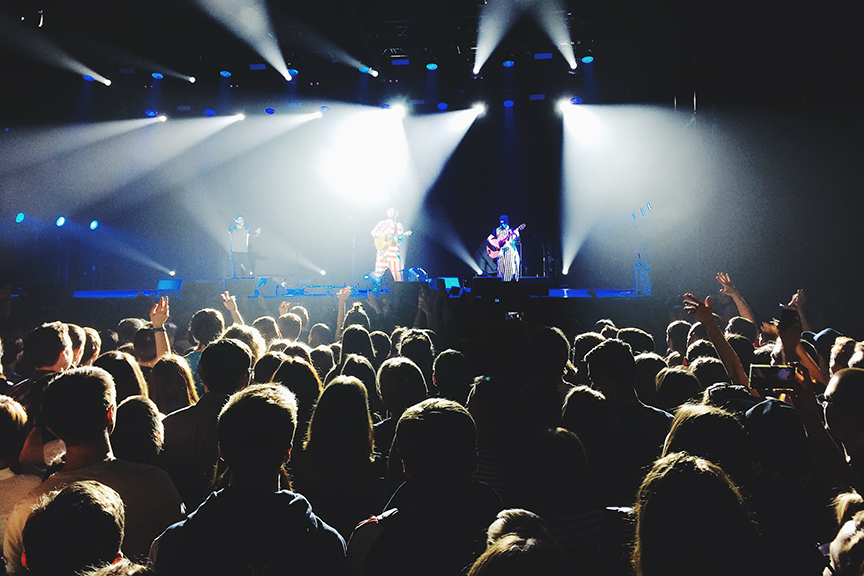
Independent venues are easy to misunderstand because the public usually experiences them only when they are alive. People walk in after the lights are on, the bar is open, the sound system is running, the staff is moving, and the artist is preparing to perform. From that side of the room, a venue can feel like a permanent part of the city, as though it has always been there and will always remain available whenever people decide they want live music.
The reality is much more fragile.
An independent venue is not only a stage. It is rent, insurance, utilities, staffing, sound equipment, lighting equipment, taxes, licenses, repairs, security, cleaning, promotion, ticketing systems, artist settlements, maintenance, and the constant pressure of guessing how many people will show up before the night has proven itself. Every show begins as a financial risk before it becomes a cultural event.
For artists, this matters because the health of independent venues directly affects the health of independent music careers. Smaller and mid-sized rooms are where artists learn how to hold an audience, build regional markets, sell merchandise, support touring acts, test new material, meet other musicians, and turn online listeners into real supporters. When these rooms weaken, the pathway between local activity and professional growth becomes harder to navigate.
The National Independent Venue Association’s 2025 State of Live study found that independent venues, promoters, and festivals generated $153.1 billion in total economic output in 2024 and contributed $86.2 billion directly to U.S. GDP. The same study found that 64% of independent stages operated without profitability, including 22% that reported struggling to maintain their business. That contradiction shows the problem clearly: independent live entertainment creates enormous economic and cultural value, but many of the actual spaces creating that value are still fighting to survive. (National Independent Venue Association)
This is why the conversation cannot be reduced to the idea that venues simply need to “pay more” or artists simply need to “draw better.” Both statements may touch part of the truth in certain situations, but neither explains the full pressure surrounding live music. Artists are carrying real costs. Venues are carrying real costs. Crews are carrying real costs. Audiences are carrying higher living costs too. The entire ecosystem is operating inside a wider economy where everything involved in producing a night out has become more expensive.
NIVA identified rising inflation, staffing costs, rent, utilities, insurance, artist expenses, anti-competitive practices, and predatory resale as pressures squeezing independent stages even while they generate significant economic value. (National Independent Venue Association) For a working artist, those words may sound like venue-side business language until they begin showing up in practical ways: smaller guarantees, fewer risky bookings, leaner production support, reduced staff, more cautious programming, higher ticket prices, and venues becoming less willing to take chances on developing acts.
That is where venue instability becomes an artist issue.
When independent rooms struggle, the first losses are often not obvious to audiences. A club may still open on Friday night. A stage may still have shows on the calendar. A venue may still appear active online. But behind the scenes, the room may be reducing risk little by little. It may book safer bills, rely more heavily on tribute acts, private rentals, themed nights, or outside promoters. It may become less willing to develop local artists because the financial margin for experimentation has disappeared. The stage remains physically present, but its role as a talent incubator quietly weakens.
For independent artists, that change matters deeply.
A healthy venue ecosystem gives artists places to grow before they are already profitable. It allows bands to become better through repetition. It gives audiences a place to discover music before algorithms define everything. It gives promoters room to build scenes instead of merely filling calendars. It gives crews consistent work and local economies a reason for people to gather. When those rooms disappear or stop taking creative risks, the damage spreads beyond one business closing.
The United Kingdom has been confronting this problem publicly through the Music Venue Trust, whose 2025 annual report found that 30 grassroots music venues permanently closed in 2025 and that 175 towns and cities, representing an estimated 25 million people, no longer receive regular touring shows by professional artists. The same reporting noted that more than half of UK grassroots music venues recorded no profit in 2025. (Music Venue Trust) While the U.K. market is not identical to the United States, the pattern is familiar: small venues can be culturally essential while remaining financially exposed.
That exposure affects the culture in ways that are not always easy to measure. A city without accessible independent rooms becomes less hospitable to original music. Artists lose places to test themselves. Younger audiences lose affordable entry points into live culture. Local crews lose work. Bands skip markets that no longer make sense. Scenes become less visible, less connected, and less capable of producing the kind of unexpected moments that make music communities feel alive.
This is why artists should care about venue challenges even while advocating for fair compensation.
Understanding venue pressure does not mean accepting bad deals, unclear pay, disrespect, unsafe working conditions, or exploitative arrangements. A struggling venue can still communicate clearly. A small room can still honor its agreements. Limited resources are not an excuse for dismissive treatment. But artists become stronger advocates when they understand the difference between a venue operating honestly under constraint and a venue using vague language to shift every risk onto musicians.
That distinction is practical. A venue facing real limitations may be able to discuss a modest guarantee, transparent door split, clear settlement, better merchandise placement, stronger promotion, future routing, or a realistic room size. A venue acting carelessly may avoid details, change terms late, treat artists as replaceable, or leave payment unclear until the end of the night. Both situations may involve limited money, but they are not the same professional environment.
For artists, the challenge is to protect their own value without losing sight of the larger ecosystem. The goal is not to defend every venue. The goal is to recognize that sustainable artist pay and sustainable venues are connected. If venues cannot stay open, artists lose stages. If artists cannot afford to perform, venues lose the people who make the rooms matter. If crews cannot make a living, the quality and safety of live events decline. If audiences stop attending regularly, the entire structure weakens.
Independent venues also face competition from forces much larger than themselves. Corporate consolidation, ticketing control, resale markets, rising real estate costs, and changing audience habits all shape the environment in which smaller venues operate. NIVA has argued that anti-competitive practices and predatory resale divert money away from venues and artists, making it harder for independent rooms to compete with larger players that have stronger leverage and more financial protection. (National Independent Venue Association)
Artists feel those forces indirectly. They may not see the ticketing negotiations, insurance renewals, zoning problems, or resale distortions, but they feel the results when rooms become more cautious, payments tighten, and opportunities narrow. The live music economy is not only the night of the show. It is the structure around the show, and that structure increasingly determines who gets to keep participating.
This does not mean independent venues are beyond criticism. Some rooms fail artists. Some communicate poorly. Some underpay, overpromise, mismanage sound, neglect hospitality, or treat local talent as disposable. A fair conversation has to leave room for that truth. But criticism becomes more useful when it is informed. The strongest advocacy does not pretend every venue is honorable or every artist is prepared. It asks what conditions allow good actors on both sides to build something that lasts.
The challenges facing independent venues should remind artists that live music is infrastructure, not just entertainment. The small stage in a neighborhood bar, the 250-capacity room downtown, the all-ages space, the listening room, the black box theater, the independent club, the DIY-adjacent cultural space — these are part of the working environment where artists become professionals. Losing them does not only reduce nightlife options. It narrows the ladder that many artists need in order to develop.
Audiences have a role in this too. A venue cannot survive on appreciation alone. Showing up, buying tickets early, respecting staff, supporting artists at the merch table, and treating smaller shows as real cultural events all help protect the rooms that make independent music visible. Live music culture is not maintained by nostalgia. It is maintained by participation.
For working artists, the lesson is not to lower expectations. It is to widen the frame. Fair compensation matters. Clear guarantees matter. Respectful treatment matters. So does the survival of the rooms where those conversations happen. The future of independent music depends on artists who understand their own value and venues that understand the value of the artists they present.
Independent venues are facing serious challenges because the economics beneath live music are strained on every side. Recognizing that strain does not weaken the argument for fair artist pay. It strengthens it by showing the full picture. A healthy live music ecosystem cannot exist if artists are expected to work at a loss, and it cannot exist if the independent rooms willing to host them disappear.