
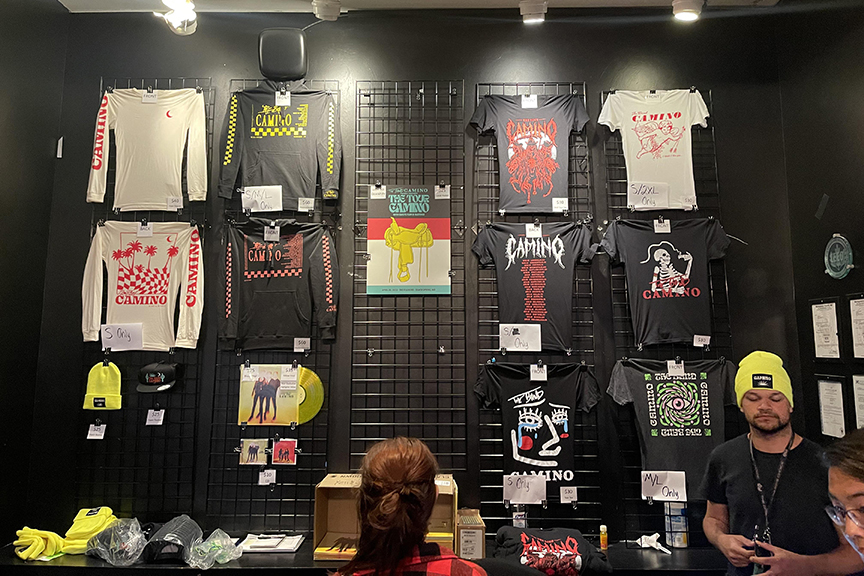
Merchandise is often treated like the easier side of an artist’s business because the concept seems simple from the outside. A band prints shirts, brings them to a show, sets them on a table, and hopes people buy them. But for independent artists, merchandise is not just decoration around the performance. It is one of the few places where audience connection, cash flow, identity, and tour survival meet in the same physical form.
That makes merchandise planning more important than many artists realize.
A good merch strategy begins with understanding what merchandise actually does. It can help cover fuel after a show. It can turn a strong night into a financially useful one. It can give fans something tangible to carry home. It can help an artist’s name travel beyond the venue. It can create a direct exchange between artist and audience in a music economy where many other forms of income arrive slowly, invisibly, or in fragments.
That directness matters. Streaming can help people discover the music, but streaming money rarely arrives with the immediacy of a sale at the merch table. A listener may play a song repeatedly without creating enough revenue for the artist to feel in any practical way. A person buying a shirt, record, poster, or other item after a show creates support that is visible immediately. For artists trying to survive the road, that difference is not theoretical. It may decide whether the next drive, hotel room, repair, or meal becomes easier to manage.
The broader merch economy reflects this shift. MIDiA Research has projected that global music merchandise could become a $16.3 billion industry by 2030, while more recent fan-behavior analysis notes that merch, physical music, and ticket buying remain tied closely to fandom rather than passive listening. That distinction is important for independent artists because merchandise is not aimed at everyone who hears a song once. It is aimed at the people who want a deeper relationship with the artist and the experience around the music. (MIDiA Research)
For working musicians, that means merch should not be treated as random product. It should feel connected to the artist’s identity, audience, price point, and live environment. A poorly planned shirt with weak artwork may technically count as merchandise, but it may not create the emotional pull that makes someone want to wear it. A thoughtful design can become part of a fan’s personal identity. That is why music merchandise works differently from ordinary retail. Fans are not simply buying fabric, vinyl, paper, or plastic. They are buying a way to stay connected to a moment, a community, a lyric, a sound, or a version of themselves that the artist helped them recognize.
That emotional connection does not remove the business discipline required. In fact, it makes discipline more important.
Merchandise costs money before it makes money. Shirts must be designed, printed, sorted, packed, transported, displayed, sold, counted, and reordered. Vinyl and CDs require production planning and upfront expense. Posters need artwork, print quality, protective handling, and a price that makes sense. Payment systems carry processing fees. Inventory takes up space in vehicles. Unsold items tie up cash that could have gone toward recording, touring, advertising, or basic survival.
This is where many independent artists get hurt. They imagine what merchandise might earn without fully calculating what it cost to create. A tour can leave a band with boxes of unsold shirts and the illusion of assets, but inventory is not the same as income until someone buys it. If too much money is trapped in slow-moving product, the artist may technically own merchandise while still lacking the cash needed to keep moving.
Planning protects against that mistake.
The best merchandise decisions usually begin with the audience the artist actually has, not the audience the artist hopes to have someday. A developing band playing small rooms may not need a massive variety of products. A solo artist with a deeply engaged fanbase may be able to sell limited items at stronger margins. A touring band with loyal regional support may need practical sizing, repeatable designs, and enough inventory to avoid selling out too early. A niche artist may succeed with unusual items that would fail for a broader audience because their fans understand the inside language of the project.
This is why knowing your audience matters more than chasing generic merch trends.
Industry data supports the idea that merch spending is connected to fan identity and genre culture. MIDiA’s 2026 merch and ticket buyer research noted that niche fandoms often show stronger spending behavior, while hip hop, R&B, and rock audiences show meaningful relationships with tickets, physical music, and merchandise. For independent artists, the useful lesson is not to copy another genre’s products blindly. It is to understand that merch performs best when it reflects a real fan relationship rather than a generic attempt to sell something at a table. (MIDiA Research)
Live shows make that relationship more immediate. A fan who enjoyed a performance may want to preserve the night. The merch table becomes the place where emotional response turns into support. This is why the way merchandise is presented matters. A dark corner, cluttered setup, unclear pricing, missing sizes, dead payment device, or rushed interaction can reduce sales even after a strong performance. The artist may have done everything right on stage and still lose support because the merch experience was treated as an afterthought.
For independent artists, the person at the merch table matters too. Fans often approach after a show because they want connection, not only product. A brief conversation can turn a casual listener into a long-term supporter. A signed record, a remembered name, or a simple moment of appreciation can make the purchase feel personal. That does not mean artists must perform emotional labor endlessly after exhausting sets, but it does mean the merch table is part of the live experience rather than separate from it.
Merchandise planning also has to account for venue conditions. Some venues take a percentage of sales. Some provide a good table and lighting. Some place merch near the entrance, while others place it somewhere people barely notice. Some require staff sellers. Some have limited space. These details affect revenue, especially for touring artists depending on merch to offset expenses. Artists should ask about merch arrangements before show day whenever possible because a strong merch night can become weaker simply through poor placement or unexpected deductions.
The issue has become visible throughout the industry as artists push back against merchandise cuts. Larger acts and advocacy campaigns have criticized high venue commissions because merchandise often represents one of the few direct revenue streams artists can control. Independent artists may feel this even more sharply because their margins are smaller and their expenses are more immediate. I cannot confirm a single standard percentage across all venues because arrangements vary widely by venue, promoter, artist level, and market, but the concern itself is widely reported across live music discussions.
At the same time, venue economics should not be ignored. Independent venues are facing real pressure. NIVA’s 2025 State of Live study found that independent venues, festivals, and promoters generated major economic activity while 64% of independent stages operated without profitability. Artists should not assume every venue commission or limitation comes from greed, but venues should also understand that taking money from merch can directly affect whether a touring artist survives the run. The healthiest arrangement begins with clarity before the night starts. (National Independent Venue Association)
Merchandise also requires artists to think about pricing honestly. Prices need to reflect production cost, audience ability, perceived value, and the actual financial needs of the tour or project. Underpricing may feel generous, but it can erase the reason the merch exists financially. Overpricing may reduce sales if the audience cannot support it. Artists often learn through testing, but every price should be connected to real math. If a shirt costs too much to produce, ships too slowly, or leaves too little margin, it may not be the right item yet.
This is where artists need to understand profit rather than revenue. Selling ten shirts at a show feels good, but the important question is what remains after production cost, processing fees, possible venue cuts, taxes, design costs, and replacement inventory are considered. The money in the cash box is not always the money the artist actually made. Serious merch planning means knowing the difference before counting the night as successful.
That kind of financial clarity matters because many musicians are already operating under unstable income conditions. The Music Industry Research Association’s survey of U.S. musicians, conducted with Princeton University Survey Research Center and MusiCares, found that surveyed professional musicians had a median total income of about $35,000, with only $21,300 from music-related work, and 61% said music income was not enough to meet living expenses. Merchandise cannot solve every financial problem, but for many artists it becomes one of the few income areas where planning can noticeably improve sustainability. (Pitchfork)
Merchandise planning should also serve the artist’s long-term identity. Every item tells the audience something about the project. A shirt design can make the music feel more serious, more personal, more regional, more mysterious, more humorous, or more connected to a specific era of the artist’s work. A vinyl pressing can signal that the album matters as a complete statement. A limited poster can make a show feel like an event rather than another date. Good merchandise deepens the world around the music.
That does not mean every artist needs expensive products immediately. Sometimes the strongest early merchandise is simple, affordable, and well-designed. A smaller selection with clear identity often works better than a crowded table full of items that do not feel connected. Fans should be able to understand quickly what is available, what it costs, and why it belongs to the artist.
There is also a practical lesson many artists learn only after struggling with inventory: merchandise should be easy to manage under real show conditions. A beautiful product that is difficult to transport, fragile, hard to display, confusing to price, or slow to fulfill may create more stress than value. Touring conditions are not showroom conditions. Artists are often tired, rushed, and operating in dark rooms with limited space. The best merch setup respects the reality of the road.
For independent artists, merchandise is not just a sales opportunity. It is a form of audience education. When fans understand that buying directly from the artist helps fund the next recording, the next tour, the next pressing, or the next creative step, the purchase becomes more meaningful. The message should not be desperate or guilt-based. It should be honest. People who care about music often want to support it; they simply do not always understand which actions matter most.
Merch planning, at its best, gives those people a clear way to participate.
The artist still has to earn the sale through strong work, thoughtful presentation, fair pricing, and real connection. But when those pieces align, merchandise becomes more than product. It becomes proof that the relationship between artist and audience can exist outside the algorithm, outside the streaming payout, and beyond the single night of the show.
For independent musicians trying to build sustainable careers, that kind of direct support is not secondary. It is part of the foundation.