
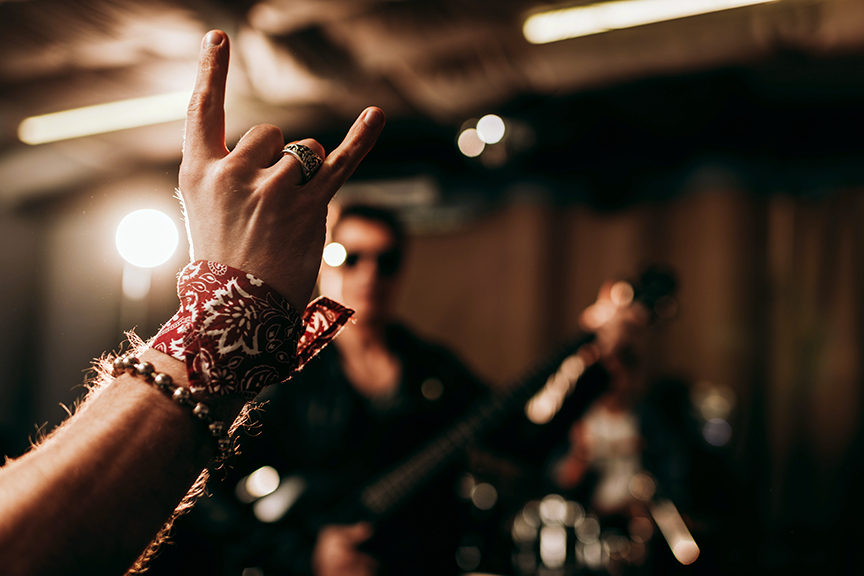
Live music culture still matters because human beings still need places where emotion, community, risk, memory, and expression happen in real time together. In an era increasingly shaped by algorithms, isolation, short-form distraction, and passive consumption, live music remains one of the few experiences where strangers willingly gather in the same physical space to feel something collectively that cannot be fully replicated through a screen.
That matters more than many people realize.
A live performance is not simply the public playback of songs. It is an exchange of energy between artists, audiences, crews, venues, promoters, and the atmosphere of the room itself. The song changes because people are physically present. The audience changes because the performance is happening in front of them rather than being delivered endlessly through headphones while multitasking through daily life. Live music creates moments that are imperfect, temporary, emotional, and human in ways digital culture often struggles to preserve.
This is why people continue attending concerts even though nearly every song ever recorded is available instantly online.
The modern listener has more access to music than any generation before them. IFPI reported that global recorded music revenues reached $31.7 billion in 2025, driven largely by streaming subscriptions and digital access. Millions of songs now exist permanently available at almost no effort to the listener. (reuters.com) Yet despite that convenience, live music continues pulling people into rooms because recorded access and physical experience are not the same thing.
A song heard through a playlist may become familiar. A song experienced live can become memory.
For artists, this distinction is essential. Streaming can introduce music to people. Social media can spread awareness. Digital platforms can help songs travel globally. But live performance is often where audiences decide whether they truly care. It is where songs stop being background and become connected to a face, a voice, a room, a shared emotional atmosphere, and a night people remember years later.
That kind of connection cannot be measured entirely through analytics.
Live music culture also matters because it creates local identity. Cities are shaped not only by buildings and businesses, but by the cultural spaces where people gather repeatedly. Independent venues, clubs, theaters, bars, DIY rooms, listening spaces, community festivals, rehearsal rooms, and local promoters help create the personality of a place. Without those environments, music becomes detached from geography. Artists may still release songs online, but the sense of scene, community, and physical participation weakens.
The National Independent Venue Association’s 2025 State of Live study found that independent venues, promoters, and festivals generated $153.1 billion in total economic output in 2024 while supporting approximately 908,000 jobs. These venues are not minor side attractions inside the economy. They are part of a large cultural infrastructure supporting artists, engineers, bartenders, security staff, local businesses, technicians, photographers, stagehands, and countless other workers tied to live entertainment. (nivassoc.org)
That infrastructure matters because live music culture is larger than the performer alone.
A healthy scene creates opportunity for emerging artists to develop before massive audiences arrive. It gives younger musicians a place to learn how rooms work, how audiences react, how crews operate, and how performance changes under pressure. It gives local audiences somewhere to discover music before it becomes heavily filtered through national trends and algorithms. It gives communities gathering places where art feels immediate rather than distant.
When live music culture weakens, people lose more than entertainment options.
They lose ritual.
They lose local identity.
They lose spontaneous discovery.
They lose social connection built around shared experience instead of isolated consumption.
This decline has become visible in many regions. The Music Venue Trust’s 2025 report in the United Kingdom found that 30 grassroots venues permanently closed in 2025 and that 175 towns and cities no longer receive regular touring from professional artists. (musicvenuetrust.com) Similar concerns exist throughout the United States as independent venues struggle with rising operating costs, shifting audience habits, and financial instability.
For artists, this decline feels personal because live culture is often where careers become real. An artist can upload songs online indefinitely without fully understanding how the music functions in a room. Live performance teaches things digital spaces cannot teach as clearly. It reveals whether songs hold emotional weight outside controlled listening environments. It exposes weaknesses in performance, communication, pacing, stamina, and preparation. It also creates confidence when the audience genuinely responds.
That relationship shapes artistic growth.
Some of the most important moments in music happen in rooms too small to appear in industry headlines. A local crowd unexpectedly connecting with a new song. A touring band finding its audience in a regional market for the first time. A young musician seeing another artist perform and suddenly realizing a different future is possible. A community rallying around a venue after a difficult year. These moments rarely become viral content, but they are part of how music culture survives generation after generation.
Live music culture also reminds people that art is labor.
When audiences stand in front of performers, they witness the physical reality behind the music. They see the preparation, the exhaustion, the equipment, the technical coordination, the emotional exposure, the skill, and the unpredictability of performance. This matters in a culture where music increasingly risks becoming invisible background utility — endlessly available, endlessly consumed, but disconnected from the human beings creating it.
The Music Industry Research Association’s survey of U.S. musicians, conducted with Princeton University Survey Research Center and MusiCares, found that 61% of surveyed musicians said music-related income was not enough to meet living expenses. That reality exists partly because music has become easy to access while the labor behind it remains difficult and expensive. Live culture helps reconnect audiences to that labor in a tangible way. (psrc.princeton.edu)
This is why live performance still carries emotional power even in a digital era. People instinctively understand there is risk involved. The artist could fail. The equipment could malfunction. The room could react unpredictably. The singer could crack emotionally during a lyric. The crowd could suddenly become unified around a moment nobody planned. Those possibilities create tension and excitement precisely because the experience is happening now rather than being endlessly editable afterward.
Human beings still crave that unpredictability.
Live music culture also matters because it creates participation rather than passive observation. People leave their homes. They organize plans. They support local businesses. They interact with strangers. They share physical space. They become part of the atmosphere affecting the performance itself. Even audiences help shape the night. A room with energy changes how artists perform. A disengaged room changes it differently. Live music is collaborative in ways streaming can never fully become.
For working artists, this means the live environment remains one of the most valuable places to build meaningful audience relationships. A person may casually stream hundreds of songs each week. They are far less likely to forget the night they stood in a room and felt genuinely connected to the artist performing in front of them. That memory creates loyalty. Loyalty creates sustainability. Sustainability creates the possibility for artists to continue making work over time.
This is why protecting live music culture matters beyond nostalgia.
The goal is not to romanticize the past or pretend older eras were perfect. Earlier music industries excluded many artists, centralized power heavily, and created barriers digital tools have helped dismantle. But preserving live music culture means preserving the human side of music itself. It means protecting the places where discovery still feels personal, where artists still develop publicly, where communities still gather physically, and where music still exists as a shared experience rather than only an endless stream of content passing through individual screens.
For audiences, supporting live music is not only about buying a ticket. It is about participating in the survival of spaces where culture still happens face-to-face. For artists, continuing to perform live is not only about promotion. It is about building relationships deep enough to survive beyond algorithms and trends.
Live music culture still matters because people still need experiences that feel real, communal, imperfect, emotional, and alive. In a world increasingly built around convenience and endless digital noise, the room itself still means something.