
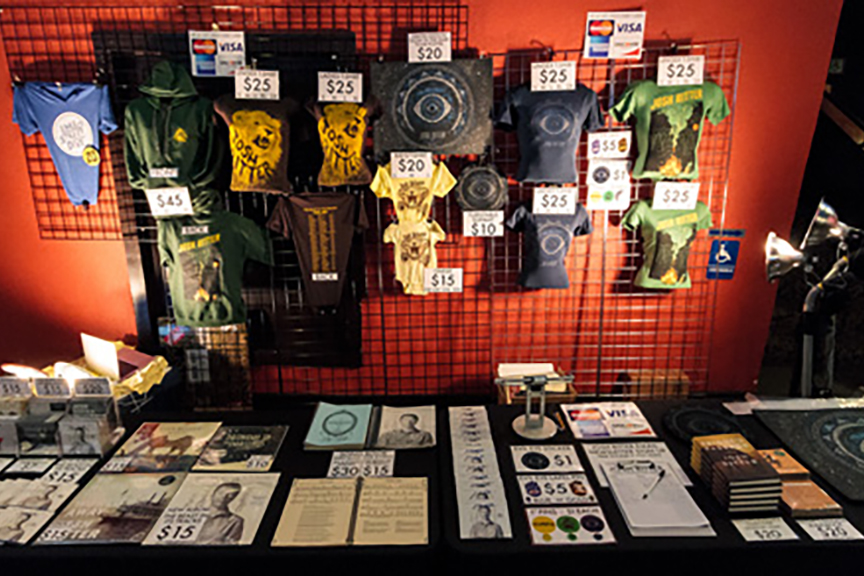
For many people outside the music industry, merchandise still feels secondary to the performance itself. Shirts, vinyl, posters, patches, stickers, hats, CDs, and other items are often viewed as souvenirs — optional add-ons attached to the “real” event happening on stage. But for a large number of independent artists, merchandise is not supplemental income at all. In practical terms, it is often the difference between a tour surviving financially or collapsing under its own expenses.
That reality has become increasingly important as touring costs continue rising while many guarantees remain unpredictable or modest, particularly for developing artists playing clubs, support slots, regional markets, or independent venue circuits.
A performance may pay enough to cover part of the evening’s immediate costs, but merchandise is often what helps offset the larger structure surrounding the tour itself: fuel, hotels, food, van repairs, tolls, parking, crew support, strings, drumheads, emergency replacements, and the countless small expenses that quietly accumulate over weeks on the road.
This is one reason independent artists place such importance on the merch table.
To audiences, the merch area may simply look like another part of the room. To the band, it can represent the most direct form of audience support available. Unlike streaming revenue, which may be fragmented across platforms, distributors, rights structures, and delayed reporting systems, merchandise sales happen immediately. A shirt sold after the show can help pay for fuel that night. A handful of vinyl sales might cover a hotel room. Strong merch nights can stabilize entire runs of dates that otherwise would have operated at a loss.
That immediacy matters enormously on tour.
Streaming has transformed music accessibility, but it has also fundamentally changed how recorded music generates revenue. According to reporting from Billboard and other industry publications, millions of streams are often required to generate income levels that remain difficult to live on independently once revenue splits, distributors, management percentages, production costs, and taxes are considered. Touring was once viewed as the financial counterpart to recorded music sales. Now, for many artists, merchandise has become the financial counterpart to touring itself.
In other words, the live performance may bring people into the room, but merchandise is often what allows the tour to continue reaching the next city.
There is also a deeper psychological element behind merchandise that matters within live music culture. Fans are not only purchasing objects. They are participating in the continuation of something they value. A shirt becomes a visible memory of the experience. A vinyl record becomes a physical connection to the artist. A patch, poster, or signed item becomes part of the audience member’s personal relationship with the music itself.
Independent artists understand this intimately because they often spend hours personally handling the merch table before and after performances. Unlike major touring operations with dedicated staff, many developing bands are simultaneously performers, salespeople, inventory managers, accountants, and promoters all in one evening. They finish a set, leave the stage sweating and exhausted, then immediately begin folding shirts, signing records, answering questions, and trying to create genuine interaction with people who supported the show.
That interaction matters beyond money alone.
The merch table has historically been one of the few remaining places in modern music culture where audiences and artists interact directly without a digital barrier between them. Conversations happen there. Friendships begin there. Returning fans introduce themselves there. Local promoters make connections there. Touring artists often remember the people who consistently stop by the table long before they remember streaming statistics.
But merchandise itself also carries financial risk that many audiences never see.
Every item sitting on a table required upfront investment before the tour even began. Shirts must be designed, printed, sized, packed, transported, and reordered. Vinyl production can cost thousands of dollars before a single copy is sold. Posters, banners, card readers, packaging materials, display lighting, shipping costs, and inventory storage all add additional expense. A band may begin a tour already carrying significant financial pressure attached directly to the merchandise intended to help support the run.
Then there are the unpredictable realities of the room itself.
A packed show does not automatically guarantee strong merch sales. Sometimes audiences arrive with limited spending money. Sometimes attendance is younger than expected. Sometimes venues place merch in poor locations. Sometimes people love the performance but leave immediately afterward. Weather affects turnout. Local economies affect turnout. Competing events affect turnout. Even exceptionally strong performances can end with disappointing sales for reasons entirely outside the artist’s control.
This unpredictability creates enormous emotional swings for touring artists because merchandise often becomes tied psychologically to survival itself. A strong merch night can instantly relieve tension inside a touring group. A weak one can quietly increase anxiety heading into the next city. Over time, artists begin monitoring audience behavior with increasing sensitivity: how long people stay after the set, whether crowds approach the table, whether vinyl is moving, whether certain shirt designs are connecting, whether inventory is running low too early or not moving at all.
For many independent musicians, the merch table becomes a real-time measure of whether the project is truly connecting with people beyond applause alone.
This is also why conversations surrounding venue merchandise cuts have become increasingly controversial throughout the industry. In some situations, venues request percentages of merchandise sales from artists already operating on narrow margins. Larger touring acts may be able to absorb those deductions more comfortably, but for developing independent artists, even modest percentages can significantly affect nightly sustainability.
At the same time, venues themselves face rising operational pressures and often view merchandise participation as part of the broader economics of hosting live events. The larger issue is not simply whether one side is “right” or “wrong,” but whether the industry fully understands how financially interconnected every part of modern touring has become.
Independent music has always involved compromise, improvisation, and resilience. But merchandise occupies a particularly important place because it represents one of the last remaining areas where artists maintain relatively direct control over their own revenue stream and audience relationship simultaneously.
That control matters.
Algorithms can change overnight.
Streaming payouts fluctuate.
Social media visibility disappears without warning.
Tour guarantees vary wildly.
But a meaningful audience connection at a merch table remains real and immediate.
Many artists eventually realize that the people buying merchandise are often doing more than purchasing products. They are helping extend the lifespan of the project itself. They are helping keep fuel in the van, replacing broken cables, supporting the next recording session, funding the next pressing run, or making it financially possible for the band to continue traveling at all.
This is why merchandise should never be dismissed as an afterthought within independent touring culture. It has quietly become one of the central economic pillars supporting modern live music at the independent level.
The performance may create the moment.
The merchandise often helps make the next one possible.